The Art of Letting Go: Effective Methods to Reduce Clutter at Home

The Journey to a Clutter-Free Home
Living in a cluttered environment can often lead to feelings of stress and overwhelm. The simple act of letting go of unnecessary items can open up both physical space and mental clarity. But how do we navigate this journey toward a more organized home?
Decluttering is not just a physical process; it is also an emotional journey. Many people find themselves grappling with sentimental items, procrastination, or the fear of making the wrong decisions about what to keep. For instance, deciding whether to keep a childhood stuffed animal or an heirloom that holds precious memories can be particularly challenging. Fortunately, there are effective methods available to assist in this transformative process.
Effective Strategies for Decluttering
Consider employing the following strategies to guide your decluttering efforts:
- Set Clear Goals: Define what a clutter-free home means to you. This can vary remarkably from one person to another. For some, it might mean having minimalistic furniture and decor, while for others, it could mean simply having every item in its designated place.
- One Room at a Time: Focus on decluttering one space before moving on to another. Attempting to tackle the entire house in one go can feel overwhelming. Start with a single room, maybe your bedroom, which serves as your personal sanctuary. Create a plan for each room to stay organized.
- Use the 90/90 Rule: Ask yourself if you’ve used an item in the last 90 days or if you will use it in the next 90 days. This straightforward question can drastically reduce the number of items you keep, providing a clear lens through which to assess your belongings.
The Psychological Aspects of Clutter
Furthermore, understanding the psychological aspects of clutter can enhance your decluttering experience. Research shows that simplifying your living space can lead to increased productivity, reduced anxiety, and improved mood. A study conducted by the Princeton University Neuroscience Institute found that clutter can overload our visual cortex, hindering our ability to focus and engage in tasks effectively.
As you navigate through your belongings, try to embrace a mindset of gratitude and freedom. Consider how the act of decluttering serves not only to simplify your space but also creates opportunities for new experiences, whether that’s dedicating more time to hobbies or hosting friends in a welcoming setting. As we dive deeper into the art of letting go, you will uncover practical tips and inspiring stories to help you embrace a more harmonious home life.

Remember, the journey to a clutter-free home is a personal one. Celebrate your progress, no matter how small, and allow your living space to reflect who you are and what you value. With determination and the right strategies, the clutter that once felt insurmountable can transform into a serene sanctuary.
Strategies for Embracing Minimalism
As we embark on the journey toward a clutter-free home, it’s vital to adopt proven strategies that not only simplify our spaces but also align with our lifestyle choices. Embracing minimalism doesn’t necessarily mean sacrificing comfort or style; instead, it allows us to discover the true value of our possessions. Below are a few effective methods to aid in the art of letting go:
- The Four-Box Method: This method encourages a hands-on approach to decluttering. Label four boxes as “Keep,” “Donate,” “Trash,” and “Unsure.” As you sort through each item, place it into the appropriate box. This not only organizes your process but also allows you to physically see your decision-making in action. You can revisit the “Unsure” box later, with a clearer mindset.
- Digital Decluttering: In today’s digital age, physical clutter often merges with digital clutter. Take the time to sort through your electronic files, photos, and emails. Aim to keep only what is relevant and necessary. By reducing your digital footprint, you’ll clear not only your hard drive but also your mind from unnecessary distractions.
- One In, One Out Rule: Prevent future clutter by implementing the “one in, one out” rule. Whenever you bring a new item into your home, make a conscious effort to remove an existing item. This practice helps maintain a balanced environment, ensuring that excess doesn’t accumulate.
Understanding Your Attachment to Clutter
Our attachment to items often goes beyond mere material possessions. Societal narratives can heavily influence our emotional bonds to things. For instance, a set of fine china inherited from a grandparent might carry with it a sense of tradition and family history. However, it’s essential to recognize when these attachments become burdensome rather than meaningful. Reflecting on each item’s significance helps cultivate a healthier relationship with our belongings.
Additionally, research highlights that our environments affect our mental health. A cluttered home can often mirror a cluttered mind, diminishing our ability to think clearly. A clean, organized space promotes not just comfort but also creativity. According to a study conducted by the University of California, Los Angeles, women who described their homes as cluttered exhibited higher levels of cortisol, a stress hormone.
As you explore various decluttering strategies, remember that what works for one person might not resonate with another. Personalize your approach based on your preferences and needs. By diving deeper into the motivations behind your belongings, you can unlock the path to letting go and foster an environment that invigorates rather than depletes.
The art of letting go is not just about discarding items; it’s an exploration of values and priorities. As you tackle each room and each item, take the opportunity to evaluate what truly brings joy and purpose to your life.
The Benefits of Reducing Clutter
Embracing the Art of Letting Go goes beyond just tidying up your home; it paves the way for a more organized and peaceful living environment. By understanding effective methods to reduce clutter, individuals can experience significant improvements in their mental health, productivity, and overall well-being.
Psychological Benefits
Living in a clutter-free space can drastically enhance your mood and mental clarity. Studies show that a clean environment reduces stress and anxiety, leading to a more positive mindset. By letting go of unnecessary items, you can create a serene sanctuary that fosters relaxation and creativity.
Improved Productivity
Clutter can be a major distraction. When your surroundings are organized, you can concentrate better and complete tasks more efficiently. Implementing the methods outlined in “The Art of Letting Go” allows you to gain control over your environment, ultimately improving your productivity at home and work.
Financial Benefits
Reducing clutter can also lead to monetary savings. By reassessing your belongings and eliminating excess, you may discover items you can sell or donate. This not only creates space but can also contribute positively to your finances and give you a sense of purpose in sharing with others.
Effective Methods to Reduce Clutter
Implementing effective methods to reduce clutter involves a thoughtful approach. Whether through the iconic KonMari Method, setting strict organizational rules, or utilizing digital decluttering techniques, the key is consistency and determination. Strategies such as experimenting with a minimalist lifestyle also offer fresh perspectives on material possessions, urging you to value experiences over items.
| Category | Advantages |
|---|---|
| Psychological | Reduces stress and enhances mental clarity. |
| Productivity | Increases focus and efficiency by eliminating distractions. |
| Financial | Opportunity to sell or donate items, contributing to financial savings. |
Taking the First Steps
Ready to take the plunge? Begin with small, manageable areas of your home to avoid feeling overwhelmed. As you cultivate this practice, you’ll gain the momentum needed to take on larger spaces, ultimately transforming your lifestyle into one of simplicity and joy.
Creating a Decluttering Schedule
One of the most effective ways to tackle clutter is to establish a consistent decluttering schedule. Setting specific times for decluttering not only ensures progress but also helps to make the practice a habitual part of your life. For example, allocating time at the end of each month for a focused decluttering session can lead to significant improvements over time. Consider integrating a routine that aligns with your lifestyle, such as dedicating Sunday afternoons to sorting through belongings or even setting a 10-minute timer each day to address small sections of your space.
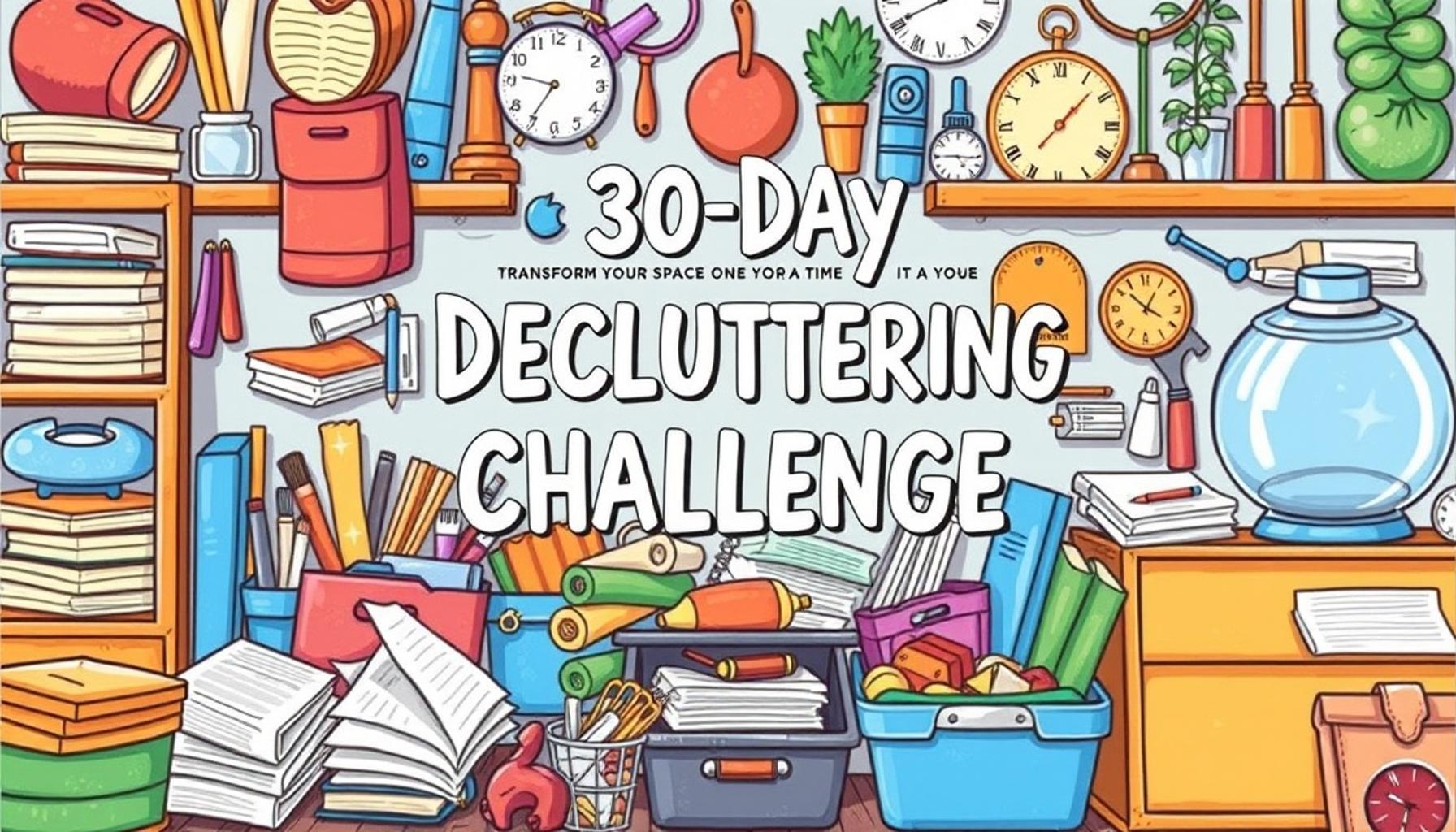
Another approach is the 30-Day Declutter Challenge, where you gradually remove one item on the first day, two items on the second, and so forth, culminating in 465 items removed by the end of the month. This challenge not only makes the process manageable but also keeps you motivated as you witness tangible results day by day. Sharing your progress on social media platforms or with friends can also foster a sense of accountability.
Incorporating Mindfulness into Decluttering
Mindfulness plays a crucial role in the decluttering process. It’s about being present and intentional with every decision made regarding your belongings. Instead of mindlessly accumulating items, mindfulness facilitates a deeper reflection about your relationship with possessions. Consider committing to at least five minutes of mindfulness before each decluttering session. This pause can help quiet the mental noise and help you discern which items you genuinely need versus those that are just taking up space.
Engaging in mindfulness practices, such as meditation or deep-breathing exercises, can also reduce anxiety surrounding the decision to let go. When attitudes toward possessions shift from attachment to appreciation, it becomes easier to release items that no longer serve a purpose. Journaling your feelings before and after decluttering sessions might further enhance your understanding of why certain items are difficult to part with.
The Role of Community Resources
Another effective method to reduce clutter involves tapping into community resources. Various organizations and charities, such as Goodwill or Habitat for Humanity, can serve as outlets for your excess belongings. Not only can donating items to local shelters, food banks, or community centers foster a sense of connection with your community, it can also provide peace of mind, knowing your items will be used to help others.
Furthermore, consider organizing or participating in local swap events or garage sales. These events can not only facilitate the decluttering process but can also lead to new friendships and community building. The idea of trading belongings rather than simply discarding them fosters a cycle of re-usage, adding another layer to your decluttering journey.
Remember that while reducing clutter can feel overwhelming, leveraging community support and integrating mindfulness into the process can enhance the experience, transforming it into an opportunity for growth rather than merely a chore. With creativity and intentionality, the journey of letting go can lead to a well-organized home that reflects your true self.
Embracing the Freedom of Letting Go
The journey of decluttering is not merely about erasing physical items from our homes; it is about creating space for what truly matters. Embracing the art of letting go requires commitment, mindfulness, and a willingness to reassess our relationship with possessions. By establishing a consistent decluttering schedule, we cultivate a proactive approach that nourishes order in our lives. Methods such as the 30-Day Declutter Challenge provide an engaging framework, allowing us to experience the satisfaction of tangible progress.
Moreover, incorporating mindfulness into our decluttering routines empowers us to make informed decisions. Understanding and reflecting on our connection to objects helps us distinguish between genuine needs and mere attachments. Journaling and mindfulness practices can further enrich this process, fostering a deeper appreciation for the items that truly enhance our lives.
Utilizing community resources expands our decluttering practice beyond personal boundaries. Donating to local charities or participating in swap events not only aids personal transformation but also strengthens community ties. In this way, letting go becomes an act of generosity, providing an opportunity to contribute positively to the lives of others.
Ultimately, decluttering is an ongoing journey—it requires persistence and patience. By embracing these effective methods, we create not only a more organized home but also a renewed sense of purpose and clarity in our lives. As we navigate through the clutter, we invite tranquility and fulfillment, allowing us to focus on the moments and relationships that matter most. So, take a deep breath, let go of what no longer serves you, and step into a future filled with simplicity and intention.

Linda Carter is a writer and organization expert specializing in minimalism and personal organization. With extensive experience helping individuals create clutter-free, functional spaces and adopt mindful habits, Linda shares her knowledge on our platform. Her goal is to empower readers with practical advice and strategies to simplify their lives, stay organized, and achieve a sense of calm and balance in their daily routines.